History
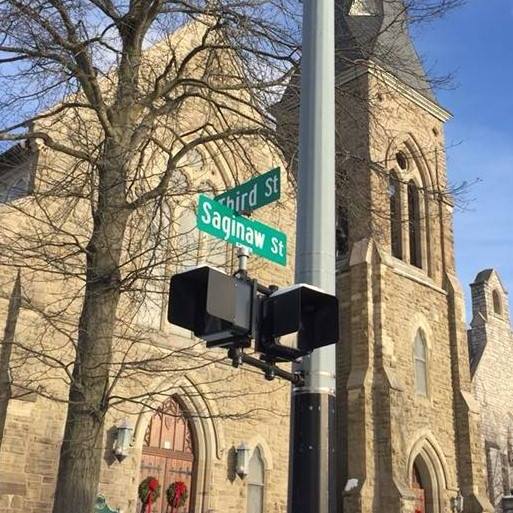 For more than 150 years, St. Pauls’ Episcopal Church has been serving the greater Flint community at the intersection of civic and spiritual life.
Established in 1817, the village that eventually became Flint was a thriving settlement where logging flourished. In 1839, the Reverend Daniel Brown came to Detroit to shepherd a congregation of worshippers in a small wooden tabernacle, the first Episcopal Church.
In 1872, our current building on Saginaw Street, was built in the heart of downtown Flint by renowned gothic church architect Gordon Lloyd. Stones for the new building were brought on sledges drawn over the ice of the Flint River.
As Flint blossomed, so did the congregation. Many of Flint’s early influencers were included in St. Paul’s faith community.
In 1913, the Rev. J. Bradford Pengelly was called as the ninth rector of St. Paul’s. He came to Flint from Chicago, where he had served at St. Edmund’s Mission. The Flint Journal described him as:
“a man of the present and future, rather than of the past… interested in all current civic movements… looking to the betterment of civic life.”
In 1916, civic and industrials leaders, Charles Stewart Mott and J. Dallas Dort laid the cornerstone for the Parish Hall at St. Paul’s Episcopal Church. That moment represented far more than the construction of a building. It reflected a shared vision for a church that would serve both God and the people of Flint—a place where faith inspired compassion, civic leadership, and a commitment to the common good.
 Follow our Facebook Page:
Friends of Historic
St. Paul’s – Flint
Perhaps a slide show here
Our Capital Campaign is under way!
Please consider making a gift to the Capital Campaign and help us continue our important work as we “seek the welfare of the city”.